
English-language version of Luistxo Fernandez's blog
Five years since they closed Egunkaria
Today, it's five years since the Spanish authorities closed Egunkaria, the 1st continuous Basque language newspaper of history. I've begun a Spanish-language blog about Egunkaria.

The coastal town that they forgot to bomb
Donostia, this city I live, is a very provincian town, although some authorities think it's New York. Let's face it, it's not. However, there are some nice and somehow isolated spots of non-conformism in the social and cultural landscape of the city. Giorgio Bassmatti is one of them. One of the many incarnations of blogger Love of 74, Giorgio is a sui-generis musician, very able to compose an instant ode to the guy that made french bank Societe Generale lose zillions of euros.
There was a small concert by Giorgio near home the other day. It was in the branch offices of a bank! You see, good taste sometimes has to find refuge in the most unexpected places.

Giorgio began with one of my favorites. Morrissey. He chose Everyday is like sunday. So fitting words: This is the coastal town that they forgot to bomb, come, come, nuclear bomb... Everyday is like sunday, everyday is silent and grey. I would have suggested another song as well, Sheakespeare's sister, for its poignant lyrics: I thought that if you had an acoustic guitar that it meant that you were a protest singer ;-)
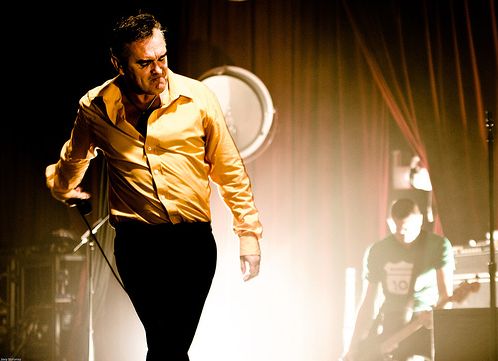
Another isolated spot of local excellence: Flickr user Yosigo. He's printed some of his works for a local exposition that opens today.

If there needs to be some Basque style definition, I wish it were more in the line of Yosigo than the Kelly Family kitsch. Pseudo-spamming chain-letters are crossing among Basque mailboxes these days referring to some Kelly familiy videos where they're signing in Basque. It seems that Maite Itoiz, one of the members of the extended family, is Basque. Anyway, look at their site and looks.

That horse lacks a horn, doesn't it?
Bring Robert Capa's lost Spanish War photos to the web
Robert Capa's lost negatives have finally come to an institution, the ICP. Great report by the New York Times, including a pic of one of the cases full of negatives, complete with its numbered tags. Among those tags, my hometown Eibar (see how it ended after the war), Bilbao, Dolores Ibarruri Pasionaria...
The mention about Amorebieta close to a campaign mass makes me suspect that these particular photos are not by Capa himself, but by David Chim Seymour. That's how ICP itself describes Seymour's work in the Spanish Civil War: (...) Basque soldiers enjoying moral support from monks at the Monastery of Amorabita (sic) and attending an outdoor mass before going into battle. The Basque chaplain pictured by Seymour, that must be it.


Anyway, I hope the ICP follows into the steps of the Library of Congress and its usage of Flickr to document thousands of pictures. How will they tag and identify all the Capa negatives in ICP's Manhattan headquartes? Bring them all to the Internet! There's people alive around that suffered the Spanish Civil War in those scenarios. My father was in Elgeta, Eibar, and other places around that front, in the same republican side of the photographers. I can sit him in front of the screen and we'll tag the pictures gladly.
Military cemeteries
I've updated the image of the Cemetery. The Plone CSS templates are too complicated for me, so I've put just a header image. Two different headers, really, for the Basque and English versions. Those cemeteries are not English, really. They are military burial grounds that we visited last summer in Normandy. The one in the Basque side is the American cemetery of Normandy, in Omaha Beach, and this one at the English side is the nearby German cemetery of La Combe, an image that a co-worker, photographer and designer Zaloa Etxaniz adapted for the header.
The title line of this blog refers to the English Cemetery of Donostia, the city in which I live. Donostia is a bilingual city, and has this English spot on it, a nice little historic cemetery for some forgotten war heroes of the 18th century. When my blog launched, this was a trilingual experiment, so I thought the English Cemetery was a fitting metaphore for it. Then El Cementerio de los Ingleses, the Spanish version, migrated to another site, the Mapamovil.

The original blog was orange, it had an image with the map location of the English Cemetery. Then in 2006 I changed to a black and white design, with some misterious girls in the header: some friends told me that header made me look like a pervert. Who cares? Anyway, now I finally show cemeteries.
Blog compliance: bilingualism, Plone, the OLPC XO, reply titles
 It's supposed that in a perfect world, the bilingual blog's interface should be localised in the same language as content... Well, now eibar.org/blogak/luistxo is in
Basque (both content and interface) and eibar.org/blogak/luistxo/en is in English, but only the content.
It's supposed that in a perfect world, the bilingual blog's interface should be localised in the same language as content... Well, now eibar.org/blogak/luistxo is in
Basque (both content and interface) and eibar.org/blogak/luistxo/en is in English, but only the content.
Click to enlarge, and you'll see the Plone editing options tabs there. Visualization was fine, and all worked perfectly.
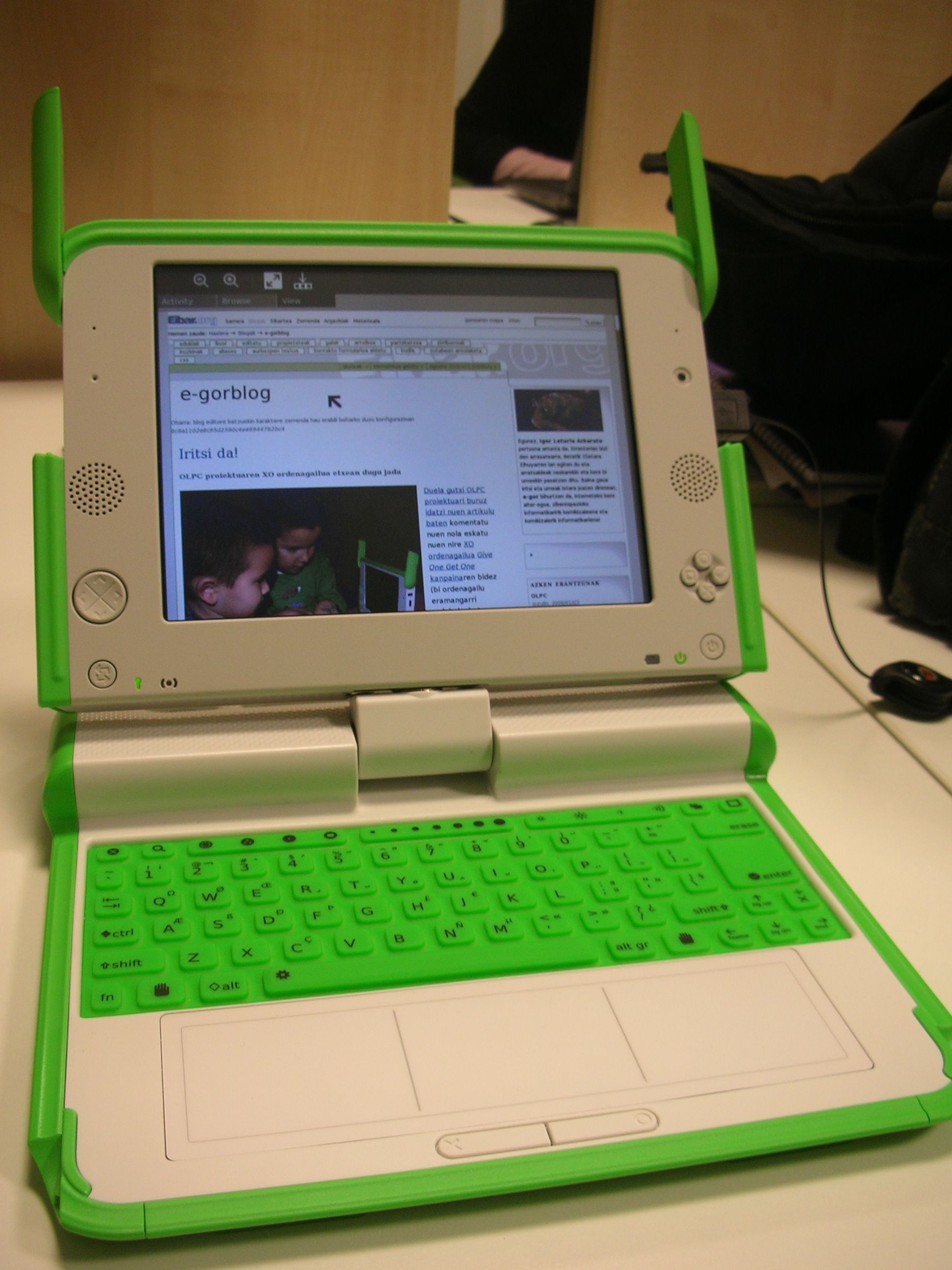
You cannot buy these in Europe, but Igor got his thru a family connection in Idaho. There was a very sensible campaign back in November and December, where you bought 2 of these, and got one, the other going to a child in the Third World.
%20Happy.png) No, Rhys, it's subject or title, as replies now may have a distinct title from blog entries, a detail that I find useful but that is not present in
many blogging platforms.
No, Rhys, it's subject or title, as replies now may have a distinct title from blog entries, a detail that I find useful but that is not present in
many blogging platforms.
Basque California bike made in Cambodia
No competition at home as in the website of Pamplona: Olentzero came, and the Three Kings came as well. These three types brought a pink California model of the BH brand to my daughter Lili. Hey, that bike brand is from my hometown Eibar, I said. But upon careful inspection, I realized that, as expected, it was made far away: in Cambodia, to be precise.

There was a time in which several bike brands were produced in Eibar. BH (Beistegui Hermanos, the Beistegi Brothers), GAC (Garate, Anitua and Co.), Abelux, Orbea... Now none of these factories is in Eibar any more, and of those that remain active in the Basque Country, they probably assemble or import Asian goods, more than anything else.
BH was one of the first employers of my father. In the early 1940s, he worked there. They didn't make bicycles then, but bombs. There was a market, clearly. From my dad's bedroom, he can still see the old factory, with the old symbol of BH (recently painted) in a wall that faces home directly.

That's what is left of BH in Eibar. A sign. More or less what's left in the actual bikes, the BH sign is not even metal, just a sticker added to the Cambodian product.
Asia is big. They also produce terrific cinema. Danger, Lust, from Ang Lee. More sexual than Brokeback Mountain (particularly, more heterosexual, I may add), a must-see.